Room and load
Room size matters, but insulation, windows, orientation, occupancy, and use also shape the equipment decision.
Targeted comfort
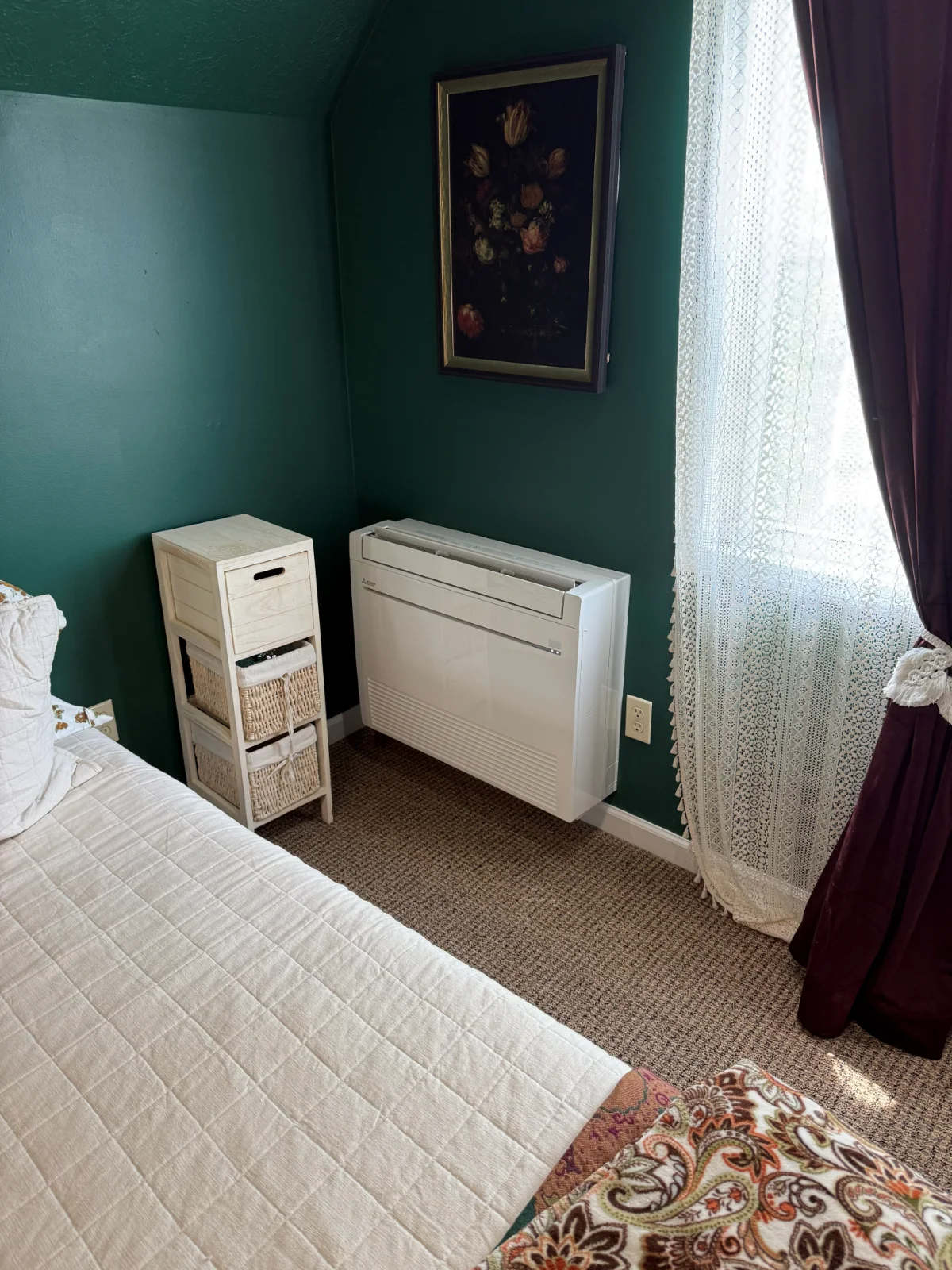
A mini split can provide targeted heating and cooling where extending or relying on the existing system is not the best fit. Bedrooms, additions, garages, condos, offices, and other hard-to-serve spaces are common reasons to consider ductless equipment.
Straight answer
It may be when one area needs independent comfort, the existing system does not serve the space well, or adding conventional distribution is impractical. The decision should consider room use, layout, equipment location, heating and cooling needs, and how the indoor and outdoor components can be placed.
Make the decision on evidence
A useful recommendation connects what the equipment is doing now to system condition, fit, and the options that are actually available.
Room size matters, but insulation, windows, orientation, occupancy, and use also shape the equipment decision.
The unit needs a practical position for airflow, access, drainage, and the way the room is arranged.
Decide whether ductless equipment is solving one zone, several zones, or a problem that belongs in a broader system conversation.
From question to options
Review how the room is used, when it needs heating or cooling, and what the existing system does now.
Consider indoor-unit location, outdoor-unit location, access, drainage, electrical needs, and the path between components.
Choose equipment around the real space and operating goal rather than relying on room size alone.
Confirm the selected arrangement, installation conditions, controls, and ongoing maintenance needs.
Fit check
A separate comfort zone can help when a room was added later or does not match the rest of the house.
Ductless equipment can be considered for spaces that need their own operating pattern and temperature control.
Compact equipment and room-level control may fit properties where space and existing distribution are limited.
A mini split may address a specific room without treating every comfort problem as a whole-system replacement.
Questions that change the decision
Many ductless systems are designed to provide both heating and cooling. The equipment and operating range should be selected for the actual space and the way it will be used.
It can be considered where existing distribution is limited or extending it is impractical. Placement, access, electrical needs, drainage, and the room's heating and cooling load still need to be evaluated.
The answer depends on the number of spaces, their loads, layout, use, and whether each needs independent control. Counting rooms alone does not settle the design.
Yes. Filters, indoor and outdoor components, drainage, and operating condition need routine attention based on the equipment and its use.